Expert Tips on Selecting Flooring That Works for Your Lifestyle, Home, and Budget
Flooring is one of the most visible, high-impact decisions you’ll make during a home renovation. You walk on it multiple times daily. It affects the look and feel of every room. It impacts durability, maintenance requirements, and ultimately, the value and functionality of your home.
Yet many homeowners rush flooring decisions, selecting based primarily on appearance without considering how the floor will actually perform in that specific room and with their specific lifestyle.
The result? Flooring that looks beautiful initially but becomes problematic — staining easily, showing every footprint, requiring excessive maintenance, or proving incompatible with your actual use patterns.
At All-Pro Renovations, we’ve installed thousands of square feet of flooring across Kansas City, Overland Park, Olathe, Lee’s Summit, and the surrounding communities. We know which flooring performs best in different rooms, which options work with different lifestyles, and how to balance aesthetic appeal with practical functionality.
In this comprehensive guide, we’ll walk you through every major flooring option, help you understand where each works best, and provide a framework for making flooring decisions that you’ll be happy with for decades.
🎯 Understanding Flooring Options: Beyond Just Appearance
When selecting flooring, most people focus on how it looks. But appearance is just one factor. The best flooring decisions balance:
- Appearance – How it looks and coordinates with your design
- Durability – How it withstands wear from foot traffic and activity
- Maintenance – How much cleaning and care it requires
- Moisture resistance – How it handles water and humidity
- Comfort – How it feels underfoot and affects temperature
- Installation difficulty – Whether it requires professional installation
- Longevity – How long it lasts before replacement is needed
- Cost – Both initial installation and lifetime maintenance
- Environmental impact – How sustainable or eco-friendly it is
The “best” flooring is the one that balances all these factors according to your specific needs and values.
🪵 Hardwood Flooring
Hardwood is the classic choice for a reason. It’s beautiful, durable, and adds value.
Types of Hardwood:
Solid Hardwood
- Single piece of wood throughout
- Can be refinished multiple times
- Most durable and long-lasting
- Most expensive option
- Susceptible to moisture and seasonal expansion/contraction
Engineered Hardwood
- Plywood base with hardwood veneer on top
- More moisture-resistant than solid
- Cannot be refinished as many times
- More affordable than solid
- Better for kitchens and basements than solid hardwood
Best Rooms for Hardwood:
Excellent choices:
- Living rooms and dining rooms
- Bedrooms
- Hallways and entryways
- Home offices
Not recommended:
- Bathrooms (too much moisture)
- Kitchens (if you have young children or messy cooking habits; still possible but requires vigilance)
- Basements (moisture concerns in most Kansas City basements)
- Laundry rooms
Hardwood Performance Characteristics:
Durability: Excellent — can last 20-50+ years with proper care
Maintenance: Moderate — requires regular sweeping and occasional mopping with specialized hardwood cleaner
Moisture resistance: Poor for solid; moderate for engineered
Comfort: Warm and comfortable underfoot; can be cold initially
Sound: Can be noisy (footsteps echo); area rugs help reduce sound
Cost: Moderate to high initial; moderate long-term maintenance
Refinishing: Solid hardwood can be sanded and refinished multiple times; engineered hardwood has limited refinishing capability
Hardwood Wood Species Considerations:
Different woods have different characteristics:
- Oak – Visible grain, very durable, moderate cost
- Maple – Light color, very hard and durable, moderate to high cost
- Walnut – Dark, rich appearance, softer than oak/maple, high cost
- Ash – Similar to oak, slightly lighter, moderate cost
- Bamboo – Not technically a hardwood but similar performance, very hard, sustainable, moderate cost
🪨 Laminate Flooring
Laminate is an affordable, durable alternative that mimics the look of hardwood, stone, or tile.
How Laminate Works:
Laminate has a photographic layer that replicates the appearance of wood, stone, or other materials, protected by a clear wear layer.
Best Rooms for Laminate:
Excellent choices:
- Kitchens (durable, easy to clean, water-resistant)
- Bathrooms (if quality product; not waterproof but highly water-resistant)
- Basements (resists moisture better than hardwood)
- Playrooms (durable for heavy use)
- Living rooms and bedrooms
Not recommended:
- Entryways exposed to excessive moisture
- Saunas or steam rooms
- Outdoor spaces
Laminate Performance Characteristics:
Durability: Very good — typically lasts 15-25 years
Maintenance: Easy — sweeping and damp mopping; very forgiving
Moisture resistance: Good for quality laminates; not fully waterproof
Comfort: Hard and cool underfoot; can feel less luxurious than hardwood; requires underlayment for sound
Sound: Can be loud/hollow sounding; underlayment helps significantly
Cost: Very affordable initially; minimal maintenance costs
Refinishing: Cannot be refinished; replacement necessary if severely damaged
Quality Matters with Laminate:
Budget laminate differs significantly from quality laminate:
- Wear layer thickness – Thicker wears longer
- Joing sealing – Better sealing prevents water intrusion
- Core density – Denser core resists swelling from moisture
- Manufacturer warranty – Indicates confidence in product durability
Budget laminates may need replacement in 10-12 years; quality laminates often last 20+ years.
🪨 Luxury Vinyl Plank (LVP) and Luxury Vinyl Tile (LVT)
Luxury vinyl has become increasingly popular as manufacturing has improved. It mimics the look of hardwood, stone, or tile with excellent water resistance.
Best Rooms for Luxury Vinyl:
Excellent choices:
- Kitchens (highly water-resistant, extremely durable)
- Bathrooms (waterproof, perfect for wet areas)
- Basements (waterproof, resists mold/mildew)
- Mudrooms and entryways (handles moisture well)
- Laundry rooms
- Any high-moisture area
Also works well in:
- Living rooms and bedrooms
- Playrooms
Not typically recommended:
- Homes with strong sustainability preferences (though some recycled options exist)
Luxury Vinyl Performance Characteristics:
Durability: Very good — typically lasts 15-25+ years depending on quality
Maintenance: Very easy — sweeps and damp mops easily; extremely forgiving
Moisture resistance: Excellent — truly waterproof in quality products
Comfort: Softer and warmer underfoot than laminate; some people prefer it to hardwood
Sound: Quieter than laminate, especially with underlayment
Cost: Moderate initially; minimal maintenance costs
Installation: Can often be clicked together without adhesive (easier DIY, though professional installation recommended)
LVP vs. LVT:
LVP (Planks) – Mimic hardwood appearance and dimensions
LVT (Tiles) – Mimic stone or tile appearance and dimensions; similar durability, just different aesthetic
Quality consideration: Quality LVP/LVT dramatically outperforms budget options in wear resistance, water resistance, and longevity.
🪨 Natural Stone Flooring
Stone (marble, granite, slate, travertine) offers luxury, durability, and timeless appeal.
Best Rooms for Natural Stone:
Excellent choices:
- Entryways (durable, handles traffic well)
- Kitchens (durable, heat-resistant)
- Bathrooms (beautiful, water-resistant)
- Sunrooms and covered patios
- High-traffic hallways
Less ideal choices:
- Basements (can be cold and hard; slippery when wet)
- Bedrooms (can feel cold; hard on feet)
Stone Types and Characteristics:
Granite
- Extremely hard and durable
- High cost
- Requires sealing
- Heat-resistant
- Elegant appearance
Marble
- Soft and luxurious appearance
- Lower hardness than granite (scratches and stains more easily)
- Very high cost
- Requires regular sealing
- Beautiful but requires commitment to maintenance
Slate
- Very durable
- Natural variation in color and texture
- Moderate to high cost
- Lower maintenance than marble
- Rustic appearance
Travertine
- Warm, earthy appearance
- Porous (requires sealing)
- Moderate durability
- Moderate to high cost
- Beautiful in Mediterranean-style homes
Stone Performance Characteristics:
Durability: Excellent — stone is extremely long-lasting (50+ years or more)
Maintenance: Moderate to high — requires regular sealing; some stones need frequent resealing
Moisture resistance: Good when sealed; natural porosity requires protective sealing
Comfort: Cool and hard underfoot; can be slippery when wet
Sound: Hard surface can create echoes; requires area rugs
Cost: High initial; moderate to high maintenance depending on stone type
Longevity: Longest-lasting flooring option; truly a lifetime investment
🪴 Ceramic and Porcelain Tile
Tile is one of the most durable and water-resistant flooring options available.
Ceramic vs. Porcelain:
Ceramic Tile
- Softer material
- More affordable
- Easier to cut and install
- Less stain-resistant
- Better for low-traffic areas
Porcelain Tile
- Harder, denser material
- More expensive
- More stain-resistant and water-resistant
- More difficult to install
- Better for high-traffic areas and wet areas
Best Rooms for Tile:
Excellent choices:
- Bathrooms (waterproof, durable)
- Kitchens (easy to clean, water-resistant)
- Entryways (handles traffic and moisture)
- Mudrooms and laundry rooms
- Basements (waterproof, resists mold)
Also works in:
- Sunrooms and transitions to outdoor spaces
- Commercial kitchens or high-volume cooking spaces
Less ideal in:
- Bedrooms (can feel cold and hard)
- Living rooms (hard underfoot)
Tile Performance Characteristics:
Durability: Excellent — lasts 20-50+ years
Maintenance: Moderate to high — tile itself is easy to clean, but grout requires attention
Moisture resistance: Excellent — fully waterproof (though grout can absorb water)
Comfort: Hard and cold underfoot; radiant heating helps significantly
Sound: Creates echoing; area rugs help
Cost: Moderate initially; grout maintenance is ongoing consideration
Grout considerations: Grout color affects appearance; darker grout hides stains better; lighter grout shows dirt more
🌾 Cork Flooring
Cork is a sustainable, unique option that’s warm, comfortable, and naturally antimicrobial.
Best Rooms for Cork:
Excellent choices:
- Living rooms
- Bedrooms
- Home offices
- Playrooms (naturally anti-microbial, soft underfoot for kids)
Not recommended:
- Kitchens (moderate water resistance, high-traffic wear)
- Bathrooms (too much water exposure)
- Basements (moisture concerns)
Cork Performance Characteristics:
Durability: Moderate — typically lasts 10-15 years; softer than hardwood so dents more easily
Maintenance: Moderate — requires protective sealant; sensitive to water
Moisture resistance: Moderate — water should be cleaned up quickly
Comfort: Warm, soft, and comfortable; excellent for standing comfort
Sound: Naturally sound-dampening; quiet underfoot
Cost: Moderate to high initially; sealant reapplication needed periodically
Sustainability: Highly sustainable; cork is renewable resource
Allergen-friendly: Naturally antimicrobial and hypoallergenic
🌳 Bamboo Flooring
Bamboo looks like hardwood, is harder than most hardwoods, and is highly sustainable.
Best Rooms for Bamboo:
Excellent choices:
- Living rooms and bedrooms
- Kitchens (harder than hardwood, more durable)
- High-traffic areas
- Any room where hardwood would work
Not recommended:
- Bathrooms (moderate moisture resistance)
- Basements (moisture concerns)
Bamboo Performance Characteristics:
Durability: Excellent — harder than most hardwoods; lasts 20-25+ years
Maintenance: Similar to hardwood — regular sweeping, occasional mopping
Moisture resistance: Moderate — more resistant than hardwood but less than luxury vinyl
Comfort: Warm underfoot; similar to hardwood
Sound: Similar to hardwood; can echo
Cost: Moderate; less expensive than premium hardwoods, more than laminate
Sustainability: Highly sustainable; bamboo grows much faster than trees; renewable resource
Appearance: Natural wood-like appearance; various colors available (natural, stained, carbonized)
🎯 Flooring Selection by Room: A Practical Framework
Rather than thinking about flooring in general, think about the specific requirements of each room.
Kitchen Flooring Priorities:
- Water resistance – Essential
- Durability – Handles heavy foot traffic and dropped items
- Easy to clean – Spills and food debris are inevitable
- Stain resistance – Food and drinks stain easily
- Comfort – You stand for extended periods
Best options: Luxury vinyl, quality laminate, porcelain tile, hardwood (if you commit to quick cleanup)
Avoid: Marble, unfinished cork
Bathroom Flooring Priorities:
- Water resistance – Critical; standing water and splash are normal
- Slip resistance – Wet floors are slippery
- Mold/mildew resistance – Moisture encourages mold
- Easy to clean – Hygiene is important
- Durability – Daily use and water exposure
Best options: Porcelain tile, luxury vinyl, ceramic tile
Avoid: Hardwood, bamboo, cork, natural stone unless sealed extensively
Bedroom Flooring Priorities:
- Comfort – Underfoot softness and warmth
- Durability – Moderate foot traffic
- Aesthetics – Sets the tone for the room
- Noise – Quiet is preferred
- Easy to clean – But not as critical as kitchens
Best options: Hardwood, bamboo, luxury vinyl, quality laminate
Also works: Cork, engineered hardwood
Living Room/Family Room Priorities:
- Appearance – High-profile room that makes an impression
- Durability – Heavy use from family activities
- Sound absorption – Reduces noise from activity
- Comfort – Soft underfoot is nice
- Easy to maintain – Frequently used spaces need forgiving floors
Best options: Hardwood, engineered hardwood, bamboo, quality laminate, luxury vinyl
Home Office Priorities:
- Durability – Standing desk, rolling chair wheels wear on floor
- Comfort – You stand/sit for extended periods
- Noise – Quiet is important for concentration
- Easy to clean – But secondary to comfort
- Aesthetics – Professional appearance
Best options: Hardwood, bamboo, cork, engineered hardwood, quality laminate
Entryway/Mudroom Priorities:
- Durability – Highest traffic in the home
- Water resistance – Moisture from weather and shoes
- Stain resistance – Dirt and salt are tracked in
- Easy to clean – Daily maintenance necessary
- Appearance – Entry sets tone for home
Best options: Porcelain tile, luxury vinyl, quality laminate, natural stone
Avoid: Carpet, hardwood (unless you commit to cleaning)
Basement Priorities:
- Moisture resistance – Critical; basements prone to dampness
- Mold resistance – Prevent moisture-related problems
- Durability – Handles potential water exposure
- Comfort – Basements can feel cold
- Appearance – Depends on intended use
Best options: Luxury vinyl, quality laminate, ceramic/porcelain tile
Avoid: Hardwood, carpet (unless absolutely waterproofed), cork
🎨 Flooring and Design: How Flooring Affects Your Home’s Look
Flooring is one of the largest visual elements in your home. It influences the overall aesthetic dramatically.
Visual Impact of Different Flooring:
Hardwood and Bamboo: Warm, classic, timeless; makes homes feel established and valuable
Luxury Vinyl Plank: Clean, modern, versatile; works in contemporary and traditional homes
Natural Stone: Luxurious, earthy, upscale; creates elegant impression
Tile: Clean, contemporary, practical; works in modern and Mediterranean designs
Laminate: Budget-conscious but can look high-quality if choosing realistic wood/stone appearance
Cork: Warm, unique, eco-conscious; creates distinctive, earthy aesthetic
Color Considerations:
Darker floors: More sophisticated appearance, but show dust and footprints; absorb light
Lighter floors: Brighter, more open feel; require more frequent cleaning
Medium tones: Best balance of sophistication and practicality; hide dirt better than light
Varied/mixed tones: More forgiving; hide dust and stains better than uniform colors
Wide Plank vs. Narrow Plank:
Wide planks (5-7 inches+): Modern, open feel; make spaces feel larger; trendy
Narrow planks (2-4 inches): Classic, traditional look; make spaces feel cozier
💰 Flooring Costs: Understanding Your Budget
Flooring costs include both material and installation. Both matter significantly.
Cost Considerations by Type:
Most affordable: Budget laminate, basic vinyl
Affordable: Quality laminate, vinyl plank, engineered hardwood, ceramic tile
Moderate: Solid hardwood, porcelain tile, bamboo, cork
Expensive: High-end bamboo, natural stone, premium hardwood
Installation Costs Matter:
Professional installation typically runs 30-50% of total flooring cost. High-quality installation is critical for:
- Proper moisture protection
- Longevity
- Warranty compliance
- Appearance
Budget installation may save money initially but often creates problems later.
Hidden Costs:
- Underlayment – Necessary for most flooring; adds to cost
- Subfloor preparation – Uneven or damaged subfloors need repair
- Removal of existing flooring – Adds to labor and disposal costs
- Transitions and trim – Often overlooked in initial budgeting
- Sealing – Natural stone and some tiles need sealing
⏱️ Durability and Lifespan: Long-Term Thinking
Flooring is a long-term investment. Understanding longevity helps make value-based decisions.
Expected Lifespans (with proper care):
- Luxury vinyl – 15-25+ years
- Laminate – 15-25 years (quality laminates; budget shorter)
- Hardwood – 20-50+ years (refinishable)
- Bamboo – 20-25+ years
- Tile – 25-50+ years
- Natural stone – 50+ years (lifetime)
- Cork – 10-15 years
- Engineered hardwood – 15-30 years
The flooring you choose today may be replaced once or twice over your lifetime. Or it might last your entire life. This affects true cost.
🔧 Installation Considerations
Some flooring is easier to install than others, affecting labor costs and DIY feasibility.
Easiest to Install (DIY possible):
- Luxury vinyl planks (click-together)
- Laminate (click-together)
Moderate Difficulty:
- Engineered hardwood (click-together versions easier)
- Floating floors (some floating options)
Difficult (Professional recommended):
- Solid hardwood (nailing required)
- Tile (grouting is skill-intensive)
- Natural stone (cutting and sealing)
Professional installation typically provides better results and ensures warranty compliance.
🌍 Environmental Considerations
If sustainability is important to you, flooring choices vary in environmental impact.
Most Sustainable:
- Bamboo – Renewable resource, grows rapidly
- Cork – Renewable resource, harvested without killing trees
- Reclaimed hardwood – Reuses existing material
Moderately Sustainable:
- FSC-certified hardwood – Responsibly harvested
- Engineered hardwood – Uses less material than solid hardwood
Less Sustainable:
- Laminate – Engineered product, not recyclable
- Luxury vinyl – Petroleum-based, not biodegradable
- Natural stone – Quarrying impacts; heavy transportation impacts
Many high-quality luxury vinyl manufacturers now produce eco-friendly versions using recycled content.
🎯 Making Your Flooring Decision: A Step-by-Step Process
Step 1: Identify Room-Specific Priorities
For each room, rank what matters most: durability, moisture resistance, aesthetics, comfort, maintenance ease.
Step 2: Understand the Room’s Challenges
Kitchens and bathrooms present unique challenges. Basements have moisture concerns. High-traffic areas need durability.
Step 3: Research Options That Meet Your Priorities
Based on your room’s specific needs, identify flooring types that address those needs.
Step 4: Visit Showrooms and See Real Samples
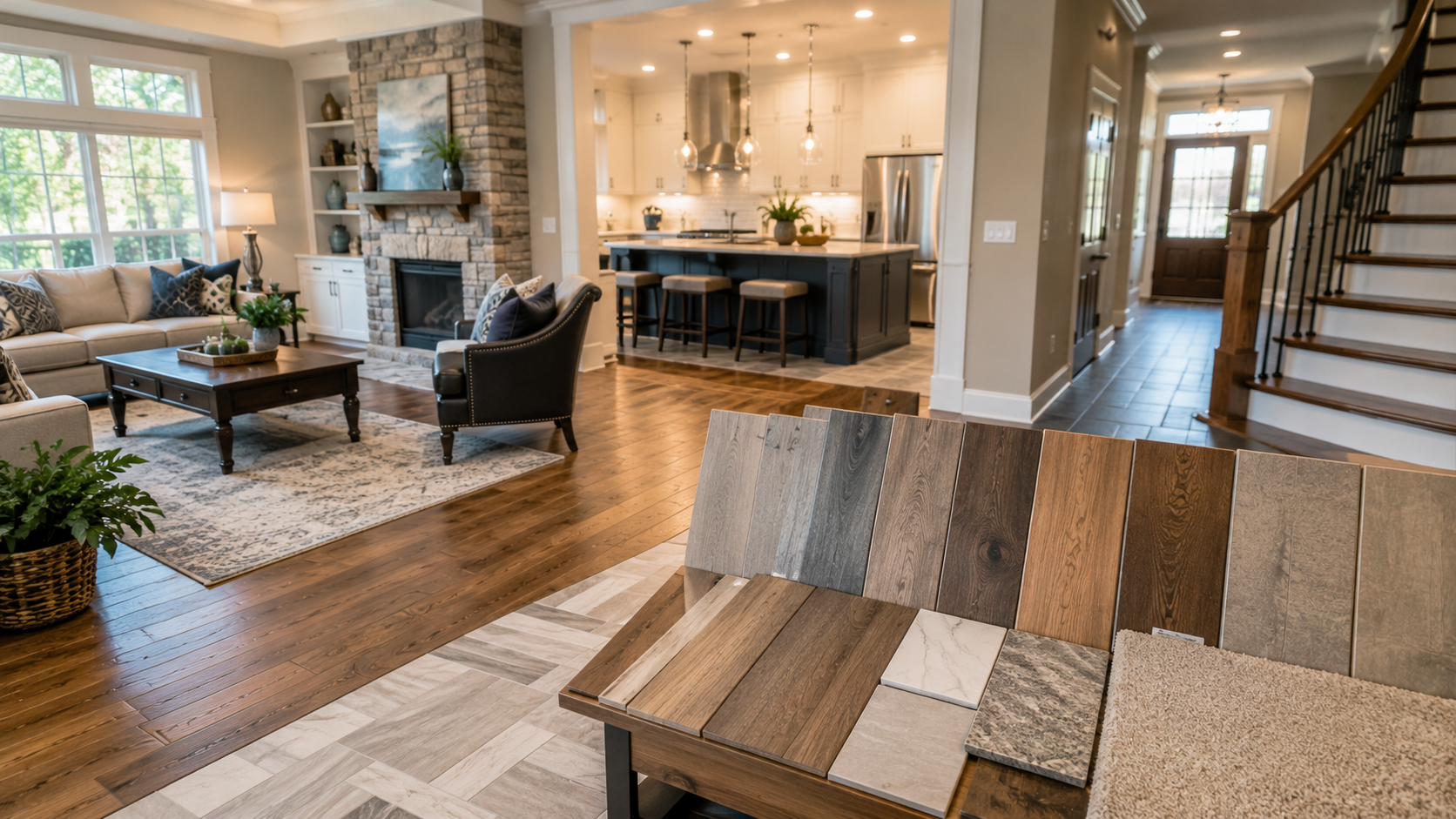
Photography doesn’t convey true color or texture. Visit showrooms. See samples in your home’s lighting.
Step 5: Consider Your Lifestyle and Use Patterns
Do you have young children or pets? Do you cook frequently? Do you have mobility concerns?
Step 6: Balance Appearance, Functionality, and Budget
The best flooring balances all three. It looks good, performs well in your home, and fits your budget.
Step 7: Plan for Installation and Maintenance
Factor in installation costs and ongoing maintenance when making your decision.
The Bottom Line: The Right Flooring for Your Life
There’s no universally “best” flooring. The best flooring for you is the one that:
- Performs well in the specific room
- Looks beautiful in your home
- Aligns with your lifestyle and use patterns
- Fits your budget (both initial and long-term)
- Fits your values (durability, sustainability, etc.)
When you align flooring selection with your actual life and needs, you’ll be happy with your choice for decades.
At All-Pro Renovations, we help Kansas City homeowners navigate flooring decisions by understanding their specific needs and helping them balance form and function. We’ve installed every major flooring type and know which performs best in different situations.
Ready to Choose Your Perfect Flooring?
If you’re planning a renovation and need guidance on flooring selection, let’s talk about your home and your lifestyle.
Contact All-Pro Renovations today for your free consultation.
📞 Call us at 913-354-2380
📅 Schedule your free estimate online
💬 Email us at info@all-proserviceskc.com
We serve homeowners across Kansas City, Overland Park, Olathe, Lee’s Summit, Shawnee, Lenexa, and all surrounding communities.
FAQs About Flooring Selection
Q: What’s the best flooring for a kitchen? A: Luxury vinyl, quality laminate, or porcelain tile are excellent choices. All resist water, handle spills, and are easy to clean. Hardwood works if you commit to quick cleanup.
Q: Can I use hardwood in a bathroom? A: Not recommended. Bathrooms have too much moisture. Hardwood swells and warps. Luxury vinyl or tile are much better choices.
Q: How do I know if flooring is waterproof vs. water-resistant? A: Waterproof means water cannot penetrate it. Water-resistant means it resists water but isn’t completely impervious. Luxury vinyl is waterproof; hardwood is water-resistant.
Q: What flooring hides dirt best? A: Medium-tone, varied-color flooring hides dirt better than uniform light or dark flooring. Laminate and luxury vinyl in natural wood tones are very forgiving.
Q: How much does flooring installation cost? A: Installation typically runs 30-50% of total flooring cost. Labor varies by flooring type and region. Professional installation is recommended for most flooring.
Q: Can I install flooring myself? A: Luxury vinyl planks and laminate can be DIY if you have experience. Tile, hardwood, and natural stone require professional installation. DIY mistakes can be costly to fix.
Q: How long should flooring last? A: Depends on type. Laminate and vinyl: 15-25 years. Hardwood: 20-50+ years. Tile and stone: 25-50+ years. Proper installation and care extend lifespan.
Q: What’s the difference between engineered and solid hardwood? A: Engineered has a plywood base with hardwood veneer; solid is one piece throughout. Engineered resists moisture better and is cheaper; solid can be refinished more times.
All-Pro Renovations has been helping Kansas City homeowners select and install quality flooring since 2017. We know which flooring performs best in our climate and in different rooms. Let us guide you to the perfect flooring for your renovation.
Posted in Construction, Design, Exteriors, Kitchen & Bath, Property Investment, Remodeling