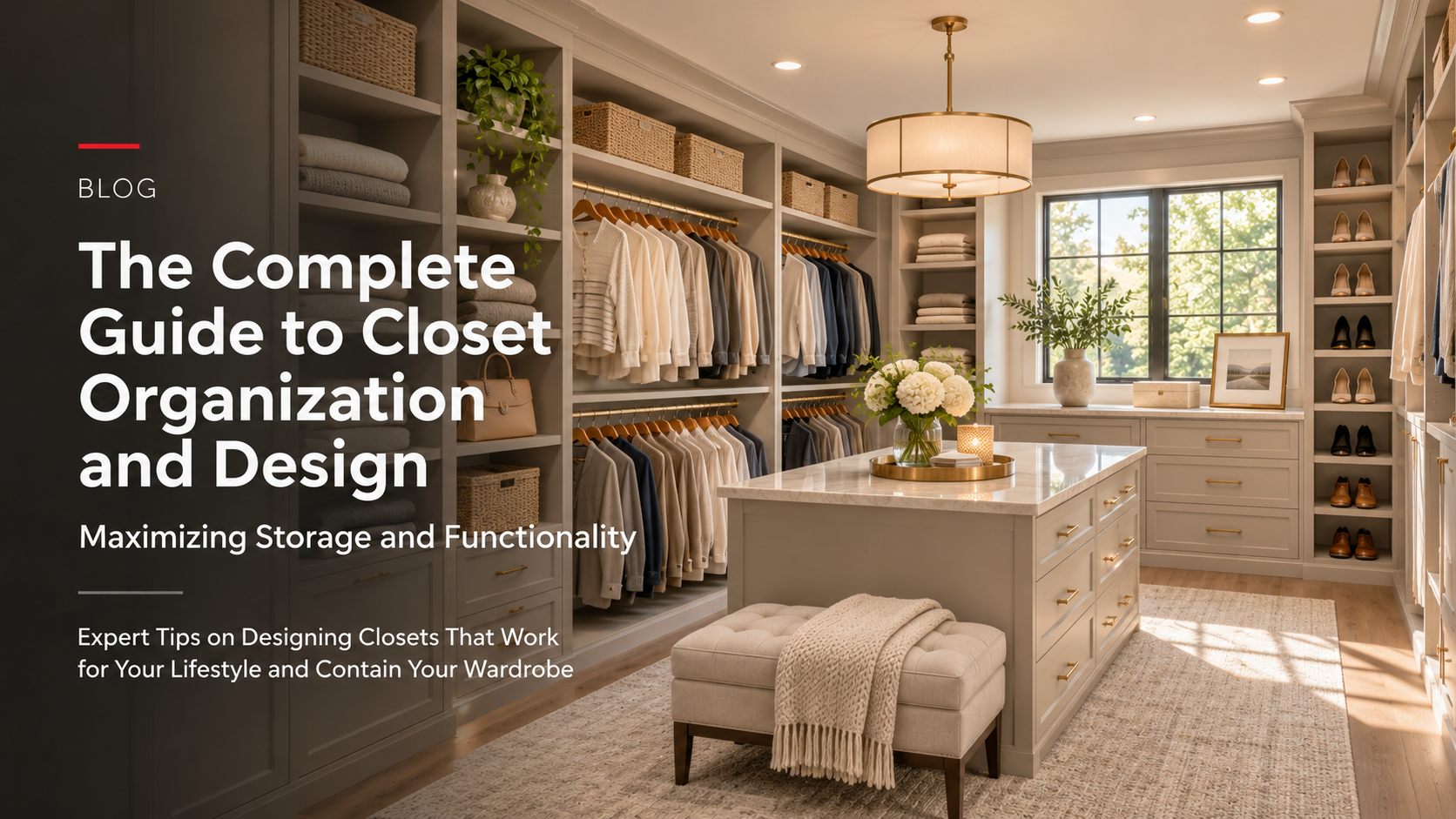
Expert Tips on Designing Closets That Work for Your Lifestyle and Contain Your Wardrobe
Your closet should be a functional space where you easily find what you need and maintain organization. Yet most Kansas City homeowners struggle with closet chaos. Clothes overflow onto chairs and beds. You can’t find items you know you own. Seasonal clothing has nowhere to go. The closet looks like a disaster despite containing the same items weekly.
A disorganized closet creates daily frustration. You waste time searching for clothes. You accidentally buy duplicates because you forget what you own. Items get wrinkled from being crammed together. Your favorite pieces get lost in chaos. Getting dressed becomes stressful rather than enjoyable. You feel guilty about the disorganization but don’t know how to fix it.
But a well-organized closet transforms your daily routine. You easily find what you need in seconds. Your wardrobe feels larger because you can access everything. Clothes stay in better condition. Getting dressed becomes enjoyable. You feel calm and organized starting your day. A functional closet affects your entire mindset and efficiency.
Yet many Kansas City homeowners don’t realize they can improve their closets without massive renovation. They think closets are fixed spaces with no options. They don’t know about professional organizing systems. They settle for overcrowded, dysfunctional spaces that frustrate them daily.
The truth: Strategic closet organization and design dramatically improves daily life and home functionality. Even modest improvements create significant satisfaction and efficiency gains. Well-organized closets increase the perceived value of homes and create spaces people genuinely enjoy using.
At All-Pro Renovations, we’ve designed and optimized dozens of closets throughout the Kansas City metro area — in Overland Park, Olathe, Lee’s Summit, Shawnee, Lenexa, Liberty, and beyond. We understand how to maximize space, create functional systems, and design closets that work for real wardrobes and lifestyles.
In this comprehensive guide, we’ll walk you through everything involved in organizing and designing your closet — so you can create a functional, organized space where getting dressed is enjoyable.
🎯 Understanding Closet Organization: More Than Just Hanging Clothes
A functional closet requires strategic planning, appropriate systems, and honest assessment of your wardrobe and needs.
What Makes a Closet Functional
Adequate Storage Capacity
- Space for everyday clothing
- Room for seasonal pieces
- Storage for accessories and shoes
- Space for growth without cramming
- Prevents forced organization breakdown
Logical Organization System
- Clothes organized by category
- Similar items grouped together
- Frequently worn items easily accessible
- Less-used items stored appropriately
- System matching how you actually dress
Accessibility and Visibility
- Items you wear regularly visible and reachable
- Can see full wardrobe at a glance
- Easy to identify what’s available
- No digging required to find pieces
- Supports daily dressing efficiency
Appropriate Hanging and Storage Solutions
- Hanging rods for hanging clothes
- Shelves for folded items
- Drawers for smaller pieces
- Bins for seasonal or specialty items
- Solutions matching your wardrobe needs
Maintenance-Friendly Design
- Organization system easy to maintain
- Doesn’t require constant reorganizing
- Accommodates new purchases naturally
- Works with how family actually dresses
- Sustainable over time
📐 Closet Space Assessment: Starting With Honest Evaluation
Understanding your current closet and wardrobe is the foundation for successful organization.
Assessing Existing Space
Measuring Your Closet
- Linear feet of hanging rod space
- Shelf space available
- Floor space for storage
- Ceiling height and clearance
- Obstructions (sloped ceilings, pipes, vents)
- Door swing and access patterns
Current Storage Elements
- Existing hanging rods (height and quantity)
- Shelves (depth, height, condition)
- Drawers or built-ins
- Closet doors (swing vs. sliding)
- Lighting available
- Access to additional spaces (under bed, etc.)
Space Limitations
- Too small for current wardrobe
- Awkward layout or shape
- Poor lighting making items invisible
- Insufficient hanging space
- No shelf or drawer storage
- Inaccessible areas (high shelves, deep corners)
Assessing Your Wardrobe
Honest Wardrobe Audit
- How many items do you actually own?
- What percentage do you wear regularly?
- How much is aspirational (not your style)?
- How much is duplicates?
- How much takes up space but rarely worn?
Wardrobe Categories
- Everyday work or casual clothes
- Professional or formal pieces
- Athletic or workout clothes
- Seasonal items (winter coats, summer shorts)
- Special occasion pieces
- Undergarments and basics
Lifestyle Assessment
- Work environment (professional, casual, creative)
- Social activities and entertainment style
- Climate and seasonal changes
- Exercise and activity level
- Dressing preferences (minimal vs. variety)
Identifying Organizational Needs
Time Constraints
- Do you have time for complex organization?
- Do you prefer simple, maintainable systems?
- Can you dedicate time to seasonal rotation?
- Do you need quick-grab organization?
Family Considerations
- Single user or shared closet?
- Children’s clothing and growth?
- Shared closet with partner?
- Different style preferences?
- Space sharing fairly?
Accessibility Needs
- Physical limitations affecting reach?
- Children needing accessible organization?
- Aging parents needing easier access?
- Guests accessing portions of closet?
- Mobility limitations affecting organization?
🧺 Decluttering: The Foundation of Organization
Before organizing, you must declutter. Removing items you don’t wear creates space and simplifies organization.
Decluttering Process
Be Honest About Items
Keep Categories
- Items you wear regularly
- Items that fit your current lifestyle
- Items in good condition
- Pieces you love and feel confident in
- Items that work with your wardrobe
Donate Categories
- Items you haven’t worn in 1-2 years
- Pieces that don’t match your lifestyle
- Clothes that don’t fit properly
- Items in poor condition
- Duplicate styles
Discard Categories
- Unwearable condition (stains, damage)
- Fashion or style doesn’t work
- Expired trends you won’t revisit
- Items taking valuable space
Storage vs. Wearing
- Seasonal items stored out of daily closet
- Off-season storage in other areas
- Items rarely worn kept minimal
- Current season items primary focus
- Regular rotation as seasons change
Decluttering Timeline
Initial Decluttering
- Approximately 4-8 hours for thorough closet
- May take multiple sessions
- Easier when you have space to spread out
- Emotional process for some items
- Worth the time investment
Ongoing Maintenance
- Review periodically (quarterly or seasonally)
- Donate items that aren’t working
- Add new items intentionally
- Remove pieces not earning closet space
- Prevents clutter buildup
📦 Closet Organization Systems: Creating Structure
Strategic organization systems make closets functional and maintainable.
Hanging Organization
By Category
- Group similar items together
- Tops, bottoms, dresses, outerwear, etc.
- Makes finding pieces quick
- Logical system easy to maintain
- Most effective for active wardrobe
By Color
- Organize by color within category
- Beautiful aesthetic
- Easier to create outfits
- Some prefer this system
- Works with category grouping
By Season
- Separate current and off-season
- Off-season stored elsewhere
- Maximizes daily closet space
- Requires storage for off-season
- Good for extreme climates
By Frequency of Use
- Most-worn items most accessible
- Eye-level placement for regular pieces
- Less-worn items less accessible
- Supports efficient dressing
- Evolves as wardrobe changes
Folded Storage
Shelf Organization
- Fold similar items together
- Stack neatly by category
- Clear visibility important
- Prevents hidden items
- Maximum use of shelf space
Drawer Organization
- File folding (fold items standing up)
- Drawers divided into sections
- Each category in own section
- Easy to see all options
- Prevents rummaging
Bin and Container Storage
- Clear containers show contents
- Label bins for easy identification
- Seasonal storage in labeled bins
- Off-season in labeled containers
- Stackable for space efficiency
Shoe Storage
Shoe Rack Solutions
- Shoe rack for frequently worn shoes
- Approximately 12-18 pairs visible
- Easy access and decision-making
- Keep shoes in view
- Encourages wear and rotation
Closed Storage
- Bins for off-season or specialty shoes
- Protects from dust
- Stackable storage
- Labeled for easy identification
- Out-of-season stored elsewhere
Shelf Storage
- Individual shelves per pair
- Maximizes space
- All shoes visible at glance
- Professional appearance
- Ideal for extensive collections
Accessory and Small Item Storage
Jewelry Organization
- Drawer organizer with compartments
- Jewelry box with sections
- Wall-mounted jewelry display
- Hanging organizer for necklaces
- Easy accessibility and visibility
Belt and Scarf Storage
- Hooks for belts and scarves
- Drawer with dividers
- Rolling organizer
- Hanging organizer
- Makes items visible and accessible
Bag and Purse Storage
- Shelf with dividers
- Hooks for handles
- Bag organizers
- Top shelf for display
- Protects from dust
🛠️ Closet Improvement Solutions: From Simple to Complex
Closet improvements range from organizational systems to structural modifications.
Budget-Friendly Solutions
Organizational Products
- Hanging organizers with shelves: approximately $20-50
- Drawer dividers: approximately $10-30
- Shelf risers: approximately $15-40
- Closet rod hooks: approximately $10-20
- Bins and containers: approximately $5-20 each
DIY Organization
- Repurpose containers and bins
- Use what you already have
- Minimal additional expense
- Creative solutions
- Effective organization possible
Strategic Rearrangement
- Move rod height
- Adjust shelf placement
- Maximize existing space
- No additional expense
- Significant impact possible
Mid-Range Improvements
Wire Shelving Additions
- Additional wire shelves: approximately $50-150
- Professional installation: approximately $100-300
- Maximizes vertical space
- Adjustable shelf heights
- Significant capacity increase
Closet Rods and Accessories
- Additional hanging rods: approximately $40-100
- Professional installation: approximately $100-200
- Double-hanging maximizes space
- Approximately doubles hanging capacity
- Moderate investment, significant improvement
Closet Doors Upgrade
- Sliding doors instead of swing: approximately $300-800
- Mirror doors: approximately $300-1,000
- Improves functionality and aesthetics
- May reveal additional wall space
- Professional installation needed
Premium Closet Systems
Wire Systems
- Professional wire closet systems
- Custom configurations
- Adjustable shelves and rods
- Approximately $500-2,000+
- Durable, long-lasting
- Professional installation required
Custom Cabinetry
- Built-in closet systems
- Custom drawers and shelves
- Premium finishes
- Approximately $2,000-8,000+
- Luxury appearance and function
- Significant renovation project
Walk-In Closet Addition
- Converting existing space
- Approximately 6-10 feet minimum width
- Approximately $3,000-15,000+
- Includes flooring, lighting, systems
- Major renovation project
- Significant impact on organization
💡 Lighting and Visibility: Functional and Aesthetic
Proper closet lighting makes finding items easy and shows wardrobe accurately.
Lighting Options
Overhead Fixtures
- Ceiling-mounted light
- Provides general illumination
- Bulb type affects color perception
- Motion sensors for convenience
- Most common closet lighting
LED Strip Lighting
- Under-shelf or above hanging rods
- Task lighting for specific areas
- Reveals all items clearly
- Contemporary appearance
- Energy-efficient
Hanging Pendant Lights
- Decorative and functional
- Stylish appearance
- Can coordinate with décor
- Professional aesthetic
- More expensive option
Mirror with Integrated Lighting
- Full-length mirror with lights
- Dressing area functionality
- Professional appearance
- Premium option
- Useful for outfit decisions
Color Temperature and Accuracy
Warm Light (2700K)
- Yellowish tone
- Colors appear warmer
- Cozy feeling
- May misrepresent colors
- Common in homes
Neutral Light (4000K)
- Balanced, accurate representation
- Colors appear true
- Professional appearance
- Recommended for closets
- Better for color matching
Natural Light
- North-facing window ideal
- True color representation
- Psychological benefit
- Not always possible
- Best when available
👗 Closet Design by Lifestyle: Customizing to Your Needs
Different lifestyles require different closet organization priorities.
Professional Wardrobe Closet
Organization Focus
- Professional pieces easily accessible
- Coordinating pieces grouped
- Work shoes and accessories organized
- Casual pieces separate
- Quick morning selections
Storage Priorities
- Hanging space for pressed pieces
- Shelf space for folded items
- Drawer space for basics
- Separate area for casual clothing
- Professional appearance
Active/Athletic Lifestyle Closet
Organization Focus
- Workout clothes accessible
- Active wear separate from casual
- Athletic shoes organized
- Activewear folded or hung
- Easy grab-and-go functionality
Storage Priorities
- Lower shelves for athletic wear
- Shoe rack for athletic shoes
- Separate section for gym clothes
- Moisture-resistant storage
- Frequent rotation consideration
Minimalist Wardrobe Closet
Organization Focus
- Capsule wardrobe organization
- Pieces that coordinate
- All items visible and accessible
- Simple, clean aesthetic
- Maximum functionality
Storage Priorities
- Less space needed
- Clean, organized appearance
- Every piece earns space
- Easy to maintain organization
- Curated wardrobe focus
Family Closet Space
Organization Focus
- Individual spaces for each person
- Children’s growth accommodated
- Seasonal rotation system
- Shared and individual items organized
- Fair space division
Storage Priorities
- Separate sections per person
- Adjustable as children grow
- Seasonal storage system
- Accessible children’s areas
- Guest/visitor area
💰 Cost Breakdown for Kansas City Homeowners
Closet organization costs vary from minimal to comprehensive renovation.
Basic Organization (Existing Closet)
DIY Organization
- Organizational products: approximately $50-200
- Hanging organizers and bins: approximately $50-150
- Shelf organizers: approximately $20-50
- Total: approximately $120-400
Professional Organizing Service
- In-home consultation: approximately $100-300
- Organizing labor (approximately 8 hours): approximately $800-1,600
- Organization products: approximately $100-300
- Total: approximately $1,000-2,200
Closet Improvement Project
Wire Shelving and Upgrades
- Additional wire shelves: approximately $100-300
- Professional installation: approximately $200-500
- Organizational products: approximately $150-300
- Lighting upgrades: approximately $100-300
- Total: approximately $550-1,400
Custom Closet System Installation
Professional Wire System
- System components: approximately $800-2,000
- Professional installation: approximately $400-1,000
- Organizational accessories: approximately $200-500
- Total: approximately $1,400-3,500
Premium Closet Renovation
Built-In Cabinetry System
- Custom cabinetry: approximately $2,000-6,000
- Professional installation: approximately $500-1,500
- Lighting: approximately $300-800
- Flooring (if needed): approximately $300-1,000
- Total: approximately $3,100-9,300
ROI and Value
- Closet organization improvements add approximately 30-50% of cost to home value
- Daily satisfaction benefit immediate
- Functional improvement impacts daily life
- Home feels more organized throughout
- Long-term lifestyle benefits significant
⏱️ Timeline for Closet Projects
Closet organization timelines vary by scope.
DIY Organization
- Assessment and planning: 1-2 hours
- Decluttering: 4-8 hours
- Purchasing products: 1-2 hours
- Organization and setup: 4-8 hours
- Total: 10-20 hours over several days
Professional Organizing Service
- Initial consultation: 1-2 hours
- Scheduling and planning: 1 week
- Professional organizing (approximately 1-2 days): 8-16 hours
- Follow-up and adjustments: 2-4 hours
- Total: 2-3 weeks project duration
Closet System Installation
- Design and planning: 1-2 weeks
- Product ordering and delivery: 2-4 weeks
- Removal of old system: 1-2 days
- Installation: 2-5 days
- Organization and setup: 2-3 days
- Total: 5-8 weeks project duration
❌ Common Closet Organization Mistakes to Avoid
Mistake 1: Organizing Without Decluttering First
The Problem: Organizing clutter just makes cluttered organization. No space for new items. System breaks down because too much to store. Wasted effort organizing what shouldn’t be there.
The Solution: Declutter thoroughly before organizing. Remove items you don’t wear. Be honest about what’s not working. Create space before implementing system. Organization system works when housing right amount.
Mistake 2: Creating System Too Complex to Maintain
The Problem: Elaborate organization system requires constant maintenance. Family members don’t maintain system. Organization breaks down quickly. System becomes source of frustration rather than solution.
The Solution: Create simple, maintainable system. Complexity should match your lifestyle. Family must be able to maintain system easily. Simpler systems work better long-term. Sustainability matters more than perfection.
Mistake 3: Inadequate Space Planning
The Problem: Organization system designed doesn’t fit actual wardrobe. Insufficient hanging space for coats. Drawer system doesn’t hold items. Shoe rack overflows immediately.
The Solution: Assess wardrobe size before designing system. Build in approximately 20% extra space for growth. Match system capacity to wardrobe. Professional assessment prevents mistakes.
Mistake 4: Ignoring Accessibility and Ergonomics
The Problem: Items you wear daily difficult to reach. Frequently worn pieces in awkward locations. System requires awkward stretching or climbing. Organization actually makes dressing less efficient.
The Solution: Keep frequently worn items most accessible. Eye-level placement for regular pieces. Ergonomic consideration in design. System should improve efficiency, not create it.
Mistake 5: Poor Visibility Design
The Problem: Items stored in back of closet become invisible. Forgotten items never worn. Duplicates purchased because you forgot what you own. Visual chaos despite organized attempts.
The Solution: Design for visibility. Can you see everything at a glance? Clear containers show contents. Open shelving better than closed cabinets for clothing. Visible items actually get worn.
Mistake 6: Skipping Professional Help When Needed
The Problem: DIY organization frustrating and ineffective. System designed doesn’t work for your lifestyle. Recurring chaos despite efforts. Professional organization not considered.
The Solution: Professional organizers provide expertise and efficiency. Save time and frustration. Systems designed for your specific lifestyle. Professional installation ensures durability. Investment pays off in daily satisfaction.
❓ Frequently Asked Questions About Closet Organization
Q: How much space does average wardrobe need? A: Approximately 30-50 linear feet of hanging space for average wardrobe. Plus shelf space for folded items and shoes. Size varies by lifestyle and climate. Professional assessment helps determine your needs.
Q: Should I organize by color or category? A: Depends on preference and lifestyle. Category (type of clothing) most practical for finding items. Color organization is beautiful but less functional. Combination approach works well.
Q: How do I maximize small closet space? A: Double hanging rods, shelf risers, vertical storage, wall-mounted organizers. Use every inch of space. Consider closet door storage. Declutter aggressively. Small closets require strategic organization.
Q: What’s the best way to store seasonal clothing? A: Remove off-season items from daily closet. Store in labeled bins or containers. Vacuum-sealed bags save space. Store under bed or in guest room. Rotation system makes switching easy.
Q: How should I organize shared closet space? A: Assign each person separate section. Use dividers to define areas. Height-appropriate access for children. Fair space division. Separate organization systems per person works well.
Q: Do I need professional organizer? A: Depends on complexity and time. Professional organizers provide expertise and efficiency. DIY works for simple organization. Complex situations benefit from professional help.
Q: How do I keep closet organized long-term? A: Simple, maintainable system. Regular editing (quarterly review). New items intentional. Seasonal rotation. Maintenance takes approximately 15 minutes monthly. System must be sustainable.
Q: What lighting works best for closets? A: Neutral temperature (4000K) LED lighting shows colors accurately. Overhead fixture plus task lighting optimal. Natural light ideal if available. Good lighting essential for function.
Q: Should I use hangers or fold items? A: Depends on closet space and clothing type. Hanging: dresses, coats, work clothes. Folding: sweaters, t-shirts, basics. Combination approach uses space efficiently. Match method to item types.
Q: How do I organize accessories effectively? A: Clear containers show contents. Drawer dividers for small items. Hooks for frequently used pieces. Hanging organizers for belts/scarves. Visibility and accessibility key.
🎯 The Bottom Line
A well-organized closet transforms daily life. You get dressed faster, feel more organized, and enjoy your wardrobe. An organized closet is worth the effort and investment.
Successful closet organization requires:
✓ Honest wardrobe assessment ✓ Thorough decluttering ✓ Organization system matching lifestyle ✓ Adequate storage capacity ✓ Accessibility and visibility design ✓ Maintenance plan you’ll actually follow ✓ Willingness to evolve as needs change
The most expensive closet organization is complex systems you can’t maintain. The best investment is simple, sustainable systems that work for your specific lifestyle.
At All-Pro Renovations, we’ve designed and optimized closets throughout Kansas City, creating functional spaces that transform daily life. We understand different lifestyles, wardrobe sizes, and how to create systems that actually work. Whether simple organization or complete closet renovation, we deliver solutions that improve your life.
Ready to transform your closet into an organized, functional space? Let’s discuss your wardrobe, assess your needs, and create a system that works for your lifestyle.
Contact All-Pro Renovations today for your free closet consultation: 📞 913-354-2380 💻 Get Your Free Closet Organization Estimate
Our team is ready to help you design and organize the perfect closet. From simple organizational systems to complete custom installations, we handle every aspect of closet organization with expertise and commitment to creating spaces that work beautifully for your daily life.
All-Pro Renovations serves Kansas City homeowners with expert renovation guidance. From planning to completion, we’re committed to delivering quality results that exceed expectations.
Posted in Construction, Design, Exteriors, Kitchen & Bath, Property Investment, Remodeling